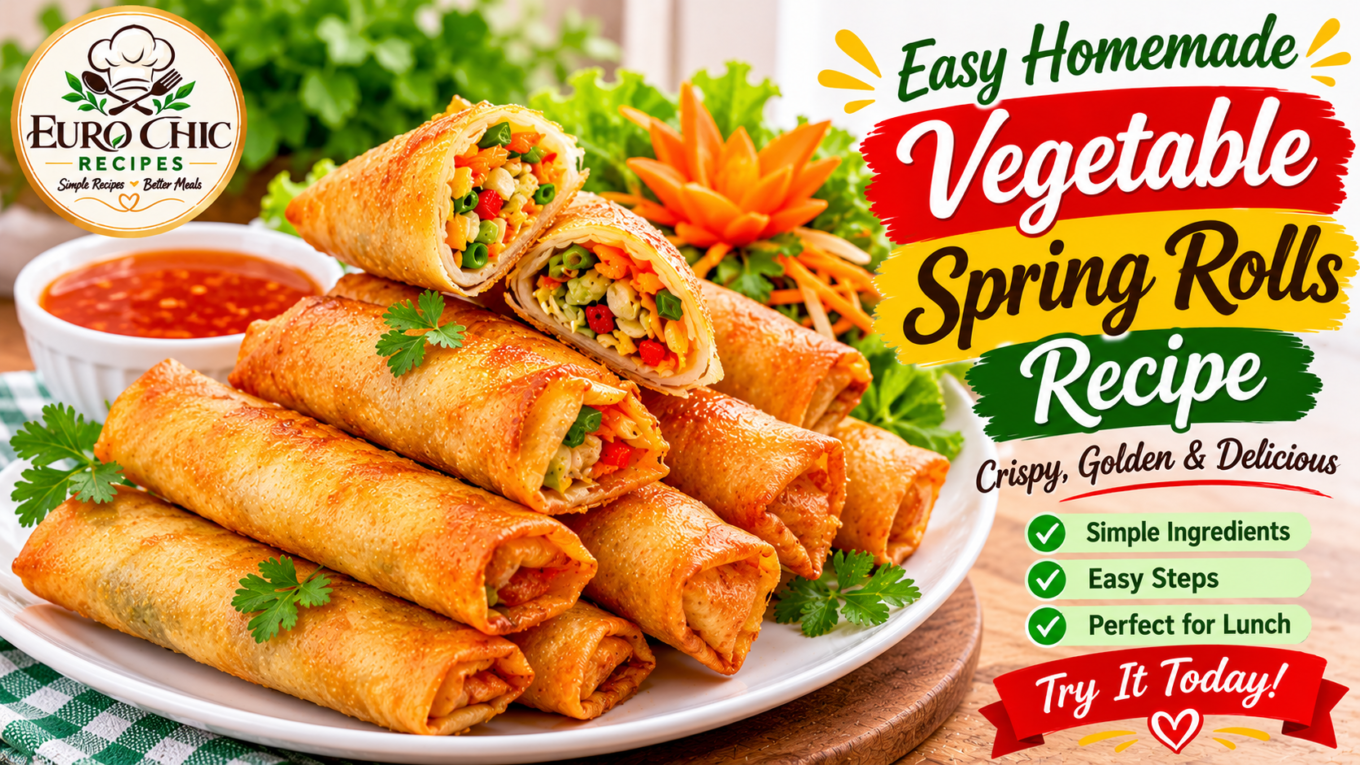
Easy Homemade Crispy Vegetable Spring Rolls Recipe – Golden, Crunchy and Delicious
Introduction
Homemade vegetable spring rolls are one of the most delicious and satisfying snacks you can prepare in your kitchen. With their crispy golden wrappers and flavorful vegetable filling, they are perfect for evening snacks, family gatherings, parties, lunchboxes, and special occasions.
These popular rolls are loved for their crunchy outside and soft, savory filling inside. Every bite brings together fresh vegetables, aromatic garlic, mild spices, and a delicious combination of textures.
The best part about making vegetable spring rolls at home is that you can choose your favorite vegetables and adjust the seasoning according to your taste. You do not need complicated cooking equipment or expensive ingredients. A few fresh vegetables, spring roll wrappers, and basic seasonings are enough to create a delicious homemade snack.
Although spring rolls are widely available in restaurants and supermarkets, preparing them at home gives you more control over the ingredients, filling, and cooking method. You can also prepare a batch in advance and freeze the uncooked rolls for later use.
In this detailed recipe, you will learn how to prepare a flavorful vegetable filling, wrap the spring rolls properly, fry them until golden and crispy, and serve them with delicious dipping sauces.
Whether you are preparing snacks for your family or looking for an attractive appetizer for guests, this easy vegetable spring rolls recipe is worth trying.
Why You’ll Love This Vegetable Spring Rolls Recipe
1. Crispy and Golden Texture
The spring roll wrappers become beautifully crisp when cooked correctly. Their crunchy texture makes them enjoyable as an appetizer or evening snack.
2. Fresh Vegetable Filling
The filling combines cabbage, carrots, capsicum, spring onions, and other vegetables. These ingredients provide color, texture, and natural flavor.
3. Easy Everyday Ingredients
Most ingredients are commonly available in grocery stores and local markets. You can also replace vegetables according to availability.
4. Perfect for Different Occasions
Serve vegetable spring rolls at birthday parties, family dinners, weekend gatherings, or as a delicious evening snack.
5. Easy to Prepare in Advance
You can prepare and fill the rolls ahead of time, refrigerate them briefly, or freeze them uncooked for convenient future cooking.
Ingredients You’ll Need
Prepare all your ingredients before starting.
For the Vegetable Filling
- 2 cups finely shredded cabbage
- 1 medium carrot, grated or julienned
- ½ cup finely chopped capsicum
- ½ cup chopped spring onions
- ½ cup thinly sliced mushrooms (optional)
- 2 cloves garlic, finely chopped
- 1 tablespoon cooking oil
- 1 tablespoon soy sauce
- ½ teaspoon black pepper
- ½ teaspoon chili flakes
- Salt to taste
- 1 teaspoon vinegar
- ½ teaspoon sesame oil (optional)
For the Wrappers
- 10–12 spring roll wrappers
- 2 tablespoons all-purpose flour
- 3 tablespoons water
For Frying
– Cooking oil as needed for deep frying
For Serving
- Sweet chili sauce
- Tomato ketchup
- Garlic dipping sauce
- Fresh coriander or spring onion for garnish
Note: Check the spring roll wrapper ingredients if you need to avoid particular allergens or follow a specific dietary requirement.
Kitchen Equipment Required
You will need these basic kitchen tools:
- Large frying pan or wok
- Mixing bowl
- Sharp knife
- Cutting board
- Grater
- Wooden spoon or spatula
- Small bowl for sealing paste
- Deep frying pan or saucepan
- Kitchen tongs
- Paper towels
- Serving plate
A wide frying pan makes it easier to cook the vegetables evenly without overcrowding them.
Step-by-Step Instructions
Step 1: Prepare the Vegetables
Wash all the vegetables thoroughly and allow excess water to drain.
Finely shred the cabbage, grate the carrot, and cut the capsicum into thin strips.
Chop the spring onions and garlic into small pieces.
Try to keep the vegetables relatively thin and similar in size. This makes them easier to cook and helps create a filling that fits neatly inside the wrappers.
Keep all the prepared vegetables in separate bowls until needed.
Step 2: Heat the Oil
Place a large frying pan or wok over medium-high heat.
Add one tablespoon of cooking oil and allow it to warm.
Add the chopped garlic and stir for approximately 20–30 seconds until fragrant.
Avoid burning the garlic because it can make the filling taste bitter.
Step 3: Cook the Vegetables
Add the carrots to the pan and stir-fry for approximately one minute.
Next, add the cabbage, capsicum, spring onions, and optional mushrooms.
Cook the vegetables over medium-high heat for approximately 2–4 minutes, stirring frequently.
The vegetables should become slightly tender while maintaining some crunch.
Avoid overcooking them because soft, watery vegetables can make the wrappers soggy.
Step 4: Add the Seasonings
Add soy sauce, black pepper, chili flakes, vinegar, and a little salt.
If desired, add sesame oil for additional aroma.
Mix everything thoroughly so the seasonings coat the vegetables evenly.
Taste the filling and adjust the seasoning according to your preference.
Remember that soy sauce already contains salt, so add additional salt carefully.
Step 5: Cool the Filling Completely
Turn off the heat and transfer the vegetable mixture to a clean bowl.
Spread the filling slightly so that it cools faster.
Allow it to reach room temperature before wrapping the spring rolls.
This step is important because hot filling can soften or damage the wrappers.
If the filling releases liquid, drain the excess moisture before using it.
Step 6: Prepare the Sealing Paste
Take a small bowl and add the all-purpose flour.
Gradually add water while stirring until you create a thick, smooth paste.
This mixture will help seal the edges of the spring roll wrappers and prevent them from opening during frying.
Keep the paste beside your wrapping area.
Step 7: Prepare the Spring Roll Wrappers
Place one spring roll wrapper on a clean, dry surface.
Position it like a diamond, with one corner facing toward you.
If you are using frozen wrappers, thaw them according to the package instructions before separating them.
Keep the remaining wrappers covered with a clean, slightly damp cloth to prevent them from drying out.
Step 8: Add the Vegetable Filling
Place approximately 2 tablespoons of cooled vegetable filling near the bottom corner of the wrapper.
Shape the filling into a short horizontal line.
Avoid adding too much filling because overstuffed spring rolls can tear during wrapping or frying.
Leave enough space around the edges to fold the wrapper securely.
Step 9: Fold the Spring Rolls
Lift the bottom corner of the wrapper and fold it over the filling.
Fold the left and right corners toward the center.
Continue rolling gently toward the top corner.
Apply a little flour paste to the final corner and press it firmly to seal.
The finished roll should be compact, neat, and securely closed.
Repeat the process with the remaining wrappers and filling.
Step 10: Heat the Cooking Oil
Pour enough cooking oil into a deep frying pan or saucepan.
Heat the oil over medium heat until it reaches approximately 170–180°C (340–355°F).
If you do not have a thermometer, test the oil with a small piece of wrapper. It should bubble gently and begin turning golden without burning immediately.
Avoid overheating the oil because the wrappers may brown too quickly while the inside remains insufficiently heated.
Step 11: Fry the Spring Rolls
Carefully place a few spring rolls into the hot oil.
Do not overcrowd the pan because adding too many rolls at once can lower the oil temperature.
Fry them for approximately 3–5 minutes, turning occasionally until all sides become golden brown and crispy.
Adjust the cooking time according to the thickness of your wrappers and the size of the rolls.
Step 12: Drain Excess Oil
Remove the cooked spring rolls using kitchen tongs or a slotted spoon.
Place them on a plate lined with paper towels or on a wire rack.
Allow excess oil to drain.
Continue frying the remaining spring rolls in batches.
Step 13: Serve Fresh and Crispy
Arrange the golden spring rolls on a serving plate.
Garnish with chopped spring onions or fresh coriander.
Serve immediately with sweet chili sauce, garlic sauce, or tomato ketchup.
Your delicious homemade crispy vegetable spring rolls are ready to enjoy!
Expert Tips for Perfect Crispy Spring Rolls
1. Remove Excess Moisture
Vegetables naturally release moisture during cooking. Cook them over relatively high heat and drain any excess liquid before filling the wrappers.
This helps prevent soggy spring rolls.
2. Never Use Hot Filling
Allow the vegetable mixture to cool completely before wrapping. Warm filling can soften the wrappers and make them difficult to handle.
3. Do Not Overfill the Wrappers
A moderate amount of filling makes wrapping easier and helps prevent the rolls from opening during frying.
4. Seal the Edges Properly
Use the flour-and-water paste to close the final corner securely. Check the edges before placing each roll into the oil.
5. Maintain the Correct Oil Temperature
Oil that is too hot can burn the wrappers, while oil that is not hot enough may produce greasy rolls.
Maintain a consistent temperature throughout frying.
6. Fry in Small Batches
Adding too many spring rolls at once reduces the oil temperature. Frying smaller batches helps achieve more even browning.
7. Use Fresh Wrappers
Wrappers that have dried out can crack while folding. Keep unused wrappers covered until you are ready to use them.
Delicious Vegetable Spring Roll Variations
One advantage of homemade spring rolls is that you can experiment with different fillings.
1. Vegetable and Cheese Spring Rolls
Add a small quantity of grated cheese to the cooled vegetable filling.
Cheese provides a creamy texture and creates a richer variation.
2. Spicy Vegetable Spring Rolls
Add chopped green chilies, extra chili flakes, or a little hot sauce to the filling.
This variation is perfect for people who enjoy spicy snacks.
3. Potato Vegetable Spring Rolls
Add mashed or finely diced cooked potatoes to the vegetable mixture.
Potatoes make the filling more substantial and provide a softer texture.
4. Mushroom Spring Rolls
Increase the quantity of mushrooms and combine them with cabbage, carrots, garlic, and spring onions.
Cook the mushrooms until their excess moisture evaporates before wrapping.
5. Baked Vegetable Spring Rolls
For an alternative to deep frying, brush the prepared rolls lightly with oil and arrange them on a baking tray.
Bake in a preheated oven at approximately 200°C (400°F), turning halfway through, until golden and crisp. Cooking times vary according to the wrapper, oven, and size of the rolls.
6. Air Fryer Vegetable Spring Rolls
Lightly brush the rolls with oil and arrange them in a single layer in the air fryer basket.
Cook at approximately 190°C (375°F), checking and turning them until golden and crisp.
Avoid overcrowding the basket.
What to Serve with Vegetable Spring Rolls
Vegetable spring rolls taste even better when served with delicious dipping sauces and complementary snacks.
- Sweet Chili Sauce: A popular choice that combines sweetness with a little heat.
- Garlic Sauce: A flavorful dipping sauce for garlic lovers.
- Tomato Ketchup: A simple option that works well for children and adults.
- Mint Chutney: Fresh mint and coriander provide a different flavor combination.
- Chinese Fried Rice: Serve spring rolls alongside homemade vegetable or chicken fried rice.
- Vegetable Noodles: A plate of noodles makes a satisfying meal with crispy spring rolls.
For parties, arrange several sauces in small bowls and serve the spring rolls while they are still warm.
How to Prepare Spring Rolls in Advance
Spring rolls are convenient for parties because you can prepare them before your guests arrive.
Prepare the vegetable filling, allow it to cool, and wrap the spring rolls.
Arrange uncooked rolls in a single layer on a tray without allowing them to touch.
Freeze until firm, then transfer them to a freezer-safe container with baking paper between layers.
For best quality, use within approximately 1–2 months.
You can fry them from frozen, without thawing, using moderately heated oil and allowing additional cooking time. Make sure the filling is thoroughly heated before serving.
Frequently Asked Questions
1. Why do my vegetable spring rolls become soggy?
Excess moisture in the vegetable filling or oil that is not hot enough can cause sogginess. Cook the vegetables briefly and drain excess liquid.
2. Can I prepare spring rolls without deep frying?
Yes. You can bake them or prepare them in an air fryer with a light coating of oil.
3. Which vegetables are best for spring rolls?
Cabbage, carrots, capsicum, spring onions, and mushrooms are excellent choices.
4. Can I use homemade spring roll wrappers?
Yes. Homemade wrappers can be used if they are thin, flexible, and suitable for the filling and cooking method.
5. How do I stop spring rolls from opening while frying?
Avoid overfilling, fold the corners properly, and seal the final edge with flour paste.
6. Can I make vegetable spring rolls spicy?
Absolutely. Add green chilies, chili flakes, or hot sauce according to your taste.
7. How long should I fry spring rolls?
Medium-sized rolls generally take around 3–5 minutes, depending on their size, wrapper thickness, and oil temperature.
8. Can I freeze uncooked spring rolls?
Yes. Freeze them separately first, then store them in a freezer-safe container.
9. What dipping sauce goes best with spring rolls?
Sweet chili sauce is a popular choice, but garlic sauce, ketchup, and mint chutney are also delicious.
10. Can I prepare the filling one day earlier?
Yes. Prepare the filling, cool it completely, and refrigerate it in an airtight container. Use it within 1–2 days and keep it properly chilled.
Conclusion
Homemade crispy vegetable spring rolls are a delicious snack that combines fresh vegetables, savory seasonings, and beautifully golden wrappers.
With a few simple ingredients and the right preparation techniques, you can create restaurant-style spring rolls in your own kitchen.
The recipe is easy to customize with different vegetables, spices, cheese, and cooking methods. Whether you choose deep frying, baking, or an air fryer, these tasty rolls are perfect for family gatherings, parties, and evening snacks.
Prepare a fresh batch, serve it with your favorite dipping sauce, and enjoy every crispy bite!